SZGHWelding robot
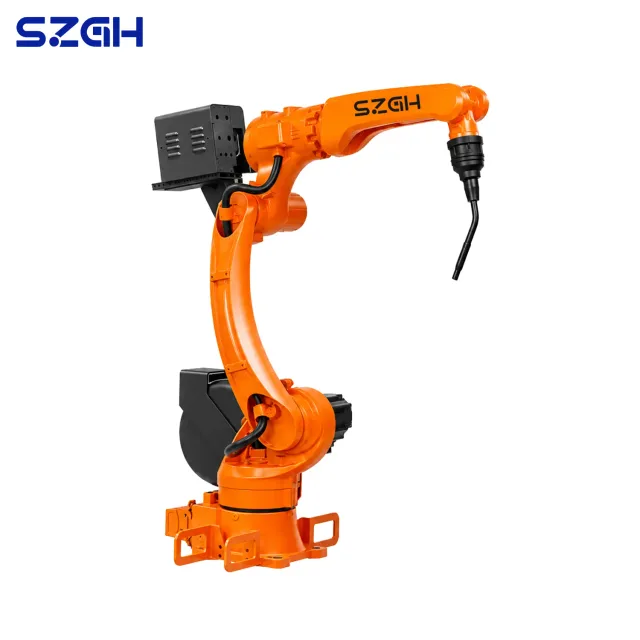
SZGH-HZ1500-10K
Welding Robot — payload 10 kg, reach 1500 mm, repeatability ±0.03 mm. Typical uses: welding and laser cutting.
Payload 10 kgReach 1500 mmRepeatability ±0.03 mm
Price on request
6-axis SZGH welding robots for repetitive arc welding, above all MIG/MAG. We plan the robot, the positioner and the whole cell together.
Welding Robot — payload 10 kg, reach 1500 mm, repeatability ±0.03 mm. Typical uses: welding and laser cutting.

Welding Robot — payload 10 kg, reach 2050 mm, repeatability ±0.03 mm. Typical uses: welding, palletizing, machine tending and material handling.

Welding Robot — payload 10 kg, reach 1510 mm, repeatability ±0.05 mm. Typical uses: welding.
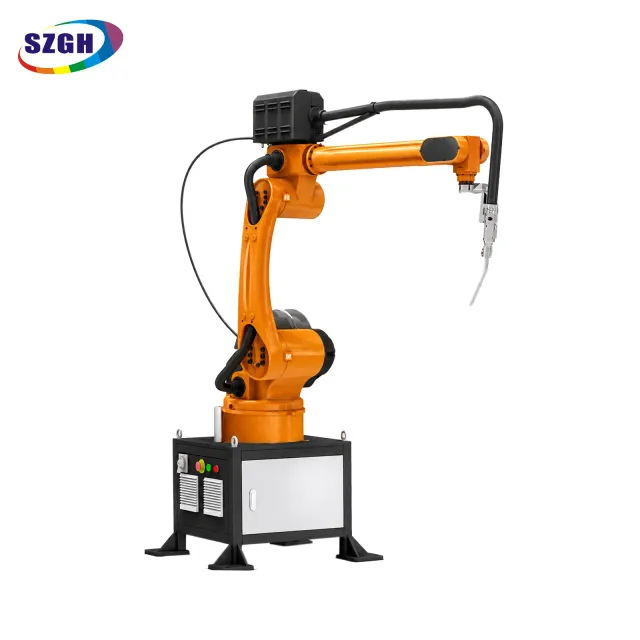
Welding Robot — payload 10 kg, reach 1850 mm, repeatability ±0.05 mm. Typical uses: welding.

Welding Robot — payload 6 kg, reach 1984 mm, repeatability ±0.05 mm. Typical uses: welding.

Welding Robot — payload 6 kg, reach 1500 mm, repeatability ±0.05 mm. Typical uses: welding.
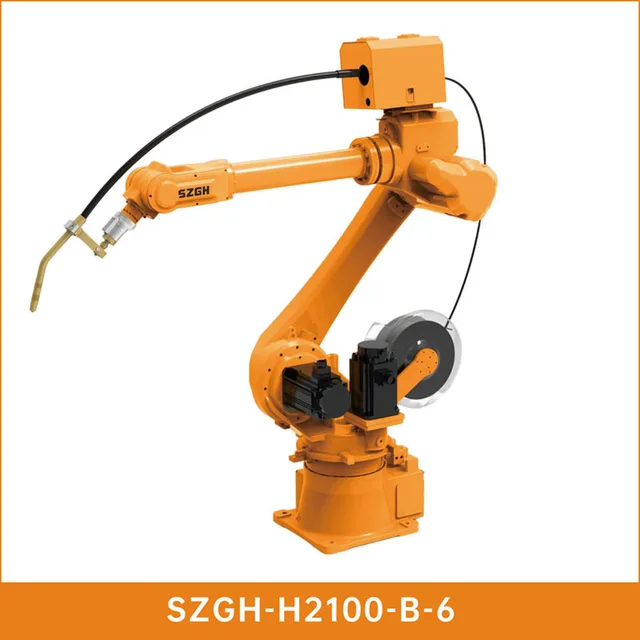
Welding Robot — payload 6 kg, reach 2100 mm, repeatability ±0.05 mm. Typical uses: welding and laser cutting.
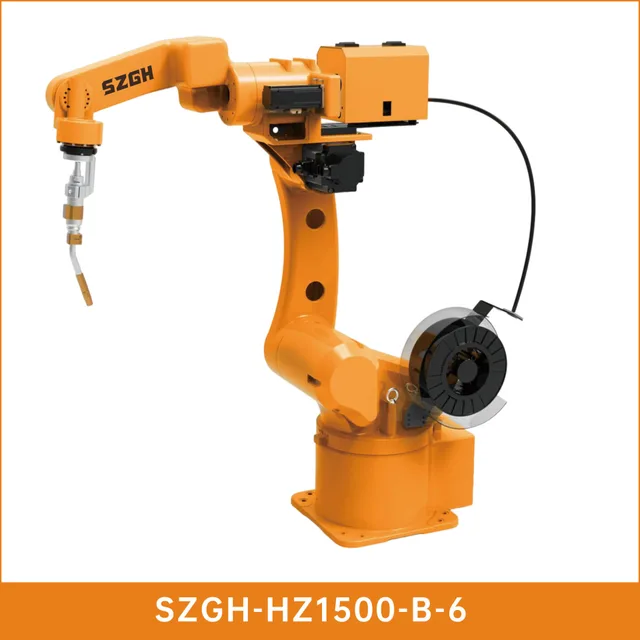
Welding Robot — payload 6 kg, reach 1500 mm, repeatability ±0.08 mm. Typical uses: welding.
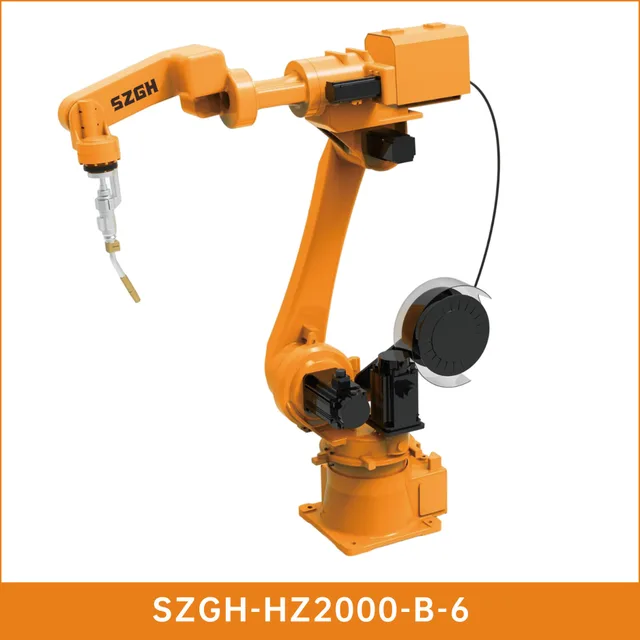
Welding Robot — payload 6 kg, reach 2000 mm, repeatability ±0.08 mm. Typical uses: welding.
Product photos: SZGH
| Model | Axes | Payload | Reach | Repeatability |
|---|---|---|---|---|
| SZGH-HZ1500-10K | 6 | 10 kg | 1500 mm | ±0.03 mm |
| SZGH-HZ2050-10K | 6 | 10 kg | 2050 mm | ±0.03 mm |
| SZGH-H1600-10C | 6 | 10 kg | 1510 mm | ±0.05 mm |
| SZGH-H1850-10C | 6 | 10 kg | 1850 mm | ±0.05 mm |
| SZGH-H2000-6C | 6 | 6 kg | 1984 mm | ±0.05 mm |
| SZGH-H1500-B-6 | 6 | 6 kg | 1500 mm | ±0.05 mm |
| SZGH-H2100-B-6 | 6 | 6 kg | 2100 mm | ±0.05 mm |
| SZGH-HZ1500-B-6 | 6 | 6 kg | 1500 mm | ±0.08 mm |
| SZGH-HZ2000-B-6 | 6 | 6 kg | 2000 mm | ±0.08 mm |
Specifications are the manufacturer's published data from SZGH and are confirmed in your written quote before ordering.
A welding robot is a 6-axis industrial robot that moves the welding torch along a programmed path at a constant speed, angle and distance. In arc welding the robot works with the welding power source, the wire feeder and the torch: it strikes the arc at the start of the seam, travels at the programmed speed with weaving if needed, and ends the arc at the end of the seam. Parameters such as current, voltage and wire speed are part of the program, so they are applied the same way on every part.
The result is consistent weld quality from part to part and more predictable production times. The most effective approach is to give repetitive series work to the robot and move experienced welders to fixture preparation, quality control and difficult one-off jobs.
When planning your welding line, also compare general-purpose 6-axis robots and, for welding next to an operator, our cobot models. For the cost items, see our guide to robot investment costs.
Besides the robot, the welding power source, torch and wire feeder, positioner, fixtures, torch cleaning station, safety equipment, programming and installation determine the total cost. A simple cell and a fully automatic cell with a positioner can differ significantly, even with the same robot. With a part drawing or photo and your annual volume, we prepare an itemized quote.
The most common use is gas metal arc welding (MIG/MAG); with a suitable power source and torch, TIG welding can also be robotized. Spot welding needs a heavy welding gun and is therefore planned with higher-payload robots. We settle the equipment for your process during the site survey.
We write the first programs during installation. After a short training, operators can usually handle daily tasks such as touching up points and changing speeds and parameters with the teach pendant; for programming new parts we offer more in-depth training.
If you have many part variants that recur at intervals, quick-change fixtures and a program library make small batches efficient as well. The decision depends on the total welding time per year and the number of recurring parts; we can work out the payback together.
You need an adequate power supply, a gas line, a flat and solid floor, fume extraction and a safe area for the robot cell. During the site survey we list these requirements and verify the layout in 3D.
Tell us about your part, the task and your target volume; we will pick the right model and system scope and send an itemized quote.
SZGH is a trademark of Shenzhen Guanhong Automation Co., Ltd. Product photos and technical data belong to the manufacturer.