SZGHCobot
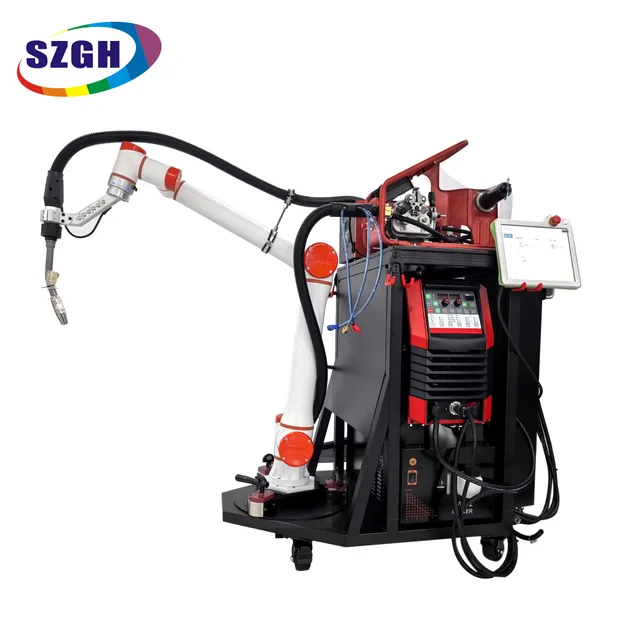
SZGH-0907-A
Collaborative Robot (Cobot) — payload 7 kg, reach 1077 mm, repeatability ±0.02 mm. Typical uses: welding, assembly and material handling.
Payload 7 kgReach 1077 mmRepeatability ±0.02 mm
Price on request
Light, easy-to-redeploy SZGH collaborative robots that can share the workspace with operators where the risk assessment allows it.
Collaborative Robot (Cobot) — payload 7 kg, reach 1077 mm, repeatability ±0.02 mm. Typical uses: welding, assembly and material handling.

Collaborative Robot (Cobot) — payload 6 kg, reach 1460.7 mm, repeatability ±0.05 mm. Typical uses: material handling, welding, assembly and grinding/polishing.

Collaborative Robot (Cobot) — payload 15 kg, reach 1464.3 mm, repeatability ±0.03 mm. Typical uses: welding, machine tending, palletizing and grinding/polishing.

Collaborative Robot (Cobot) — payload 20 kg, reach 2027 mm, repeatability ±0.05 mm. Typical uses: welding, machine tending and material handling.
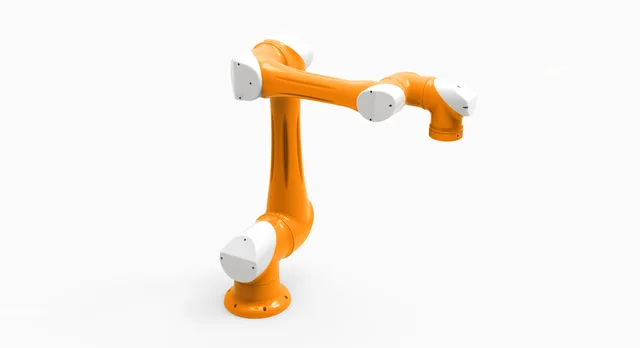
Collaborative Robot (Cobot) — payload 3 kg, repeatability ±0.03 mm. Typical uses: material handling, assembly, packaging and welding.
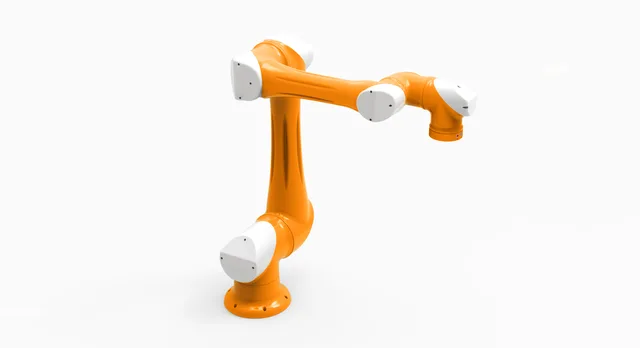
Collaborative Robot (Cobot) — payload 6 kg, repeatability ±0.03 mm. Typical uses: packaging, welding and assembly.
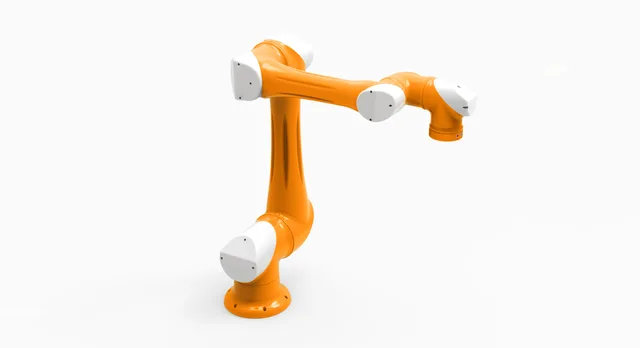
Collaborative Robot (Cobot) — payload 20 kg, repeatability ±0.03 mm. Typical uses: palletizing, packaging, assembly and welding.
Product photos: SZGH
| Model | Axes | Payload | Reach | Repeatability |
|---|---|---|---|---|
| SZGH-0907-A | 6 | 7 kg | 1077 mm | ±0.02 mm |
| SZGH-1406-A | 6 | 6 kg | 1460.7 mm | ±0.05 mm |
| SZGH-1415-A | 6 | 15 kg | 1464.3 mm | ±0.03 mm |
| SZGH-1820-A | 6 | 20 kg | 2027 mm | ±0.05 mm |
| SZGH-BC600-B-6 | 6 | 3 kg | – | ±0.03 mm |
| SZGH-BC900-B-6 | 6 | 6 kg | – | ±0.03 mm |
| SZGH-BC1600-D-6 | 6 | 20 kg | – | ±0.03 mm |
Specifications are the manufacturer's published data from SZGH and are confirmed in your written quote before ordering.
A cobot (collaborative robot) is an industrial robot designed to share the workspace with people. Conventional robots usually work behind a safety fence, while cobots, thanks to safety functions such as power and force limiting, can be used without a fence or with less guarding in applications where the risk assessment allows it. Their light build also makes them easier to move between stations and adapt to new jobs.
An important point: it is the application, not the robot, that is collaborative. The part the robot carries, the gripper or the welding torch can also pose risks. Every application therefore needs its own risk assessment based on ISO 10218 and ISO/TS 15066.
For a step-by-step approach, read our guide on how to choose a cobot; for jobs that need high speed and payload, see our industrial robot arms.
Payload and reach set the price of the robot; the end effector (gripper, vacuum or welding torch), stand or mobile platform, safety equipment, programming and training complete the investment. Once we understand your application, we prepare an itemized quote.
Only if the risk assessment of the application allows it. Speed and force limits, the shape of the tool, the part being carried and how the operator approaches the robot are assessed together; where needed, extra measures such as an area scanner or light curtain are planned.
Close work with operators, frequent job changes and light loads favor a cobot. For high speed, heavy parts and fully automatic cells, a conventional industrial robot is usually more productive. We can compare both options against your cycle time target in a simulation.
Yes. Cobot welding is used especially for quickly set-up welding stations for small and medium batches. Welding fumes, arc light and hot parts are separate hazards, so station design and safety measures are still required.
Tell us about your part, the task and your target volume; we will pick the right model and system scope and send an itemized quote.
SZGH is a trademark of Shenzhen Guanhong Automation Co., Ltd. Product photos and technical data belong to the manufacturer.